
The citation that doesn’t happen. The container that doesn’t overflow.
On-demand service for sharps and medical waste. Real-time fill monitoring across every container, dispatch before threshold, and an audit trail that holds up under inspection.
Calendar-based sharps service runs blind, and the regulator doesn’t care.
A sharps container fills up at the rate of the procedures running near it. The service schedule doesn’t. The schedule is a guess at where the work will be, and in sharps, the cost of being wrong is regulatory, not operational.
Calendar-based service produces two failure modes the regulator notices. Some containers get serviced before they need it, which is wasted labor. Some containers go past full before the next scheduled service, which is an overflow event. An overflow event is a citation waiting for an inspector to walk through.
OSHA’s Bloodborne Pathogen Standard is explicit. Containers must be replaced before they’re full and must not allow contents to protrude. A single visible-overflow finding during an inspection can trigger a citation, a fine, and a documentation review that exposes every other compliance gap on the property. A single hazardous waste violation can trigger investigation, reporting requirements, and reputational damage that stretch into six figures by the time the dust settles.
For the compliance officer: the calendar isn’t protecting the operation. It’s creating the events the audit was supposed to find.




.png)
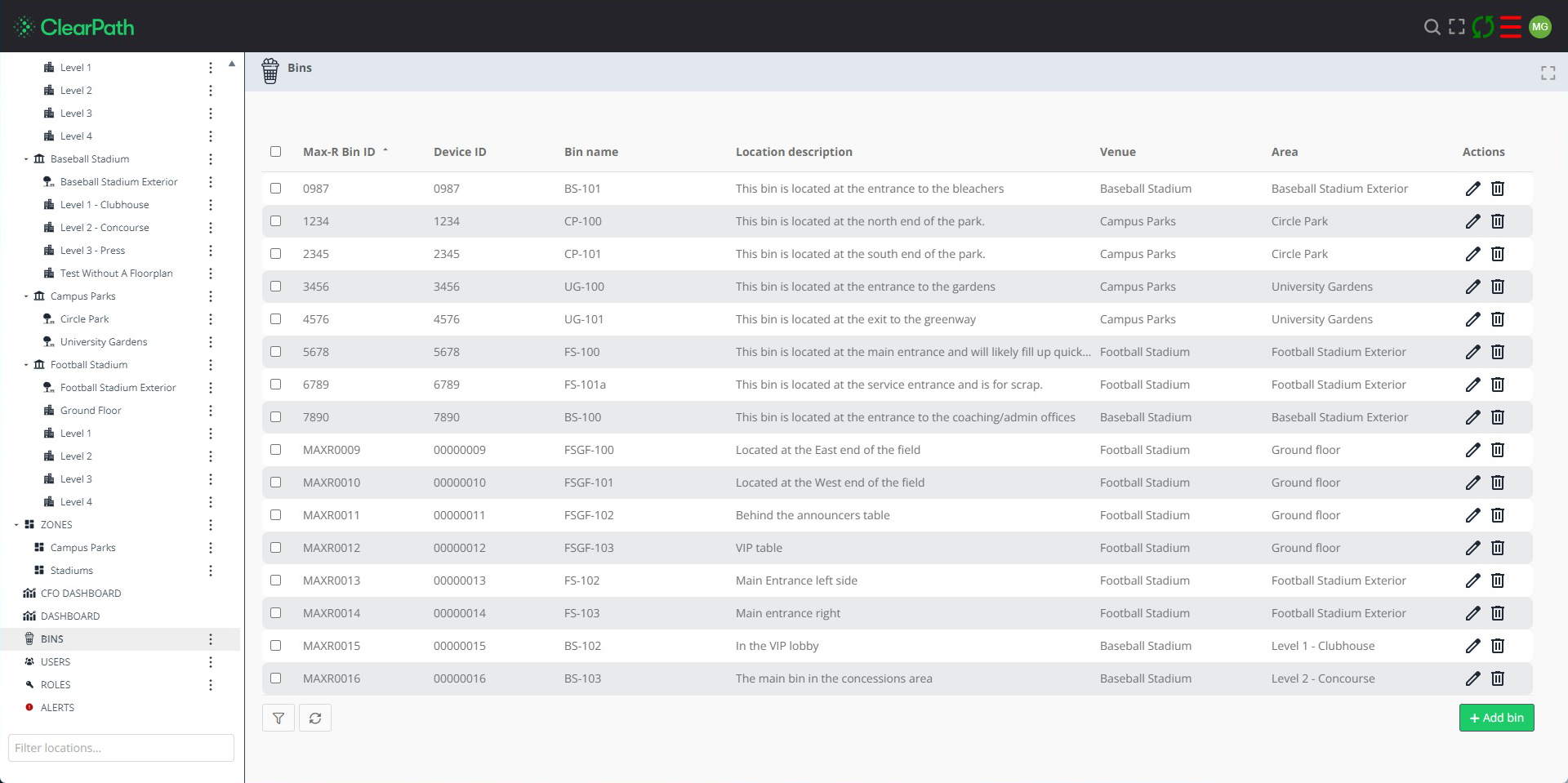
ClearPath sees the fill. The service happens before the citation does.
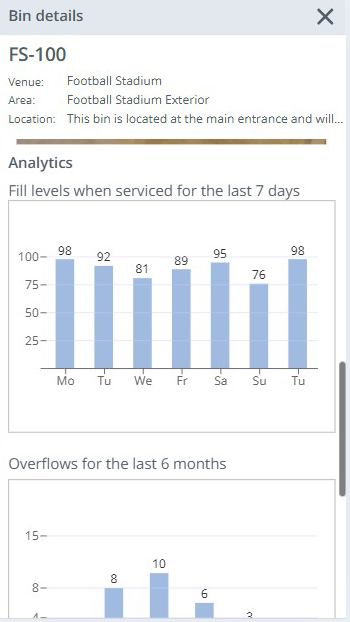
Sensors in every container track real-time fill. ClearPath reads the data, decides which containers need service before threshold, and dispatches the technician to them.
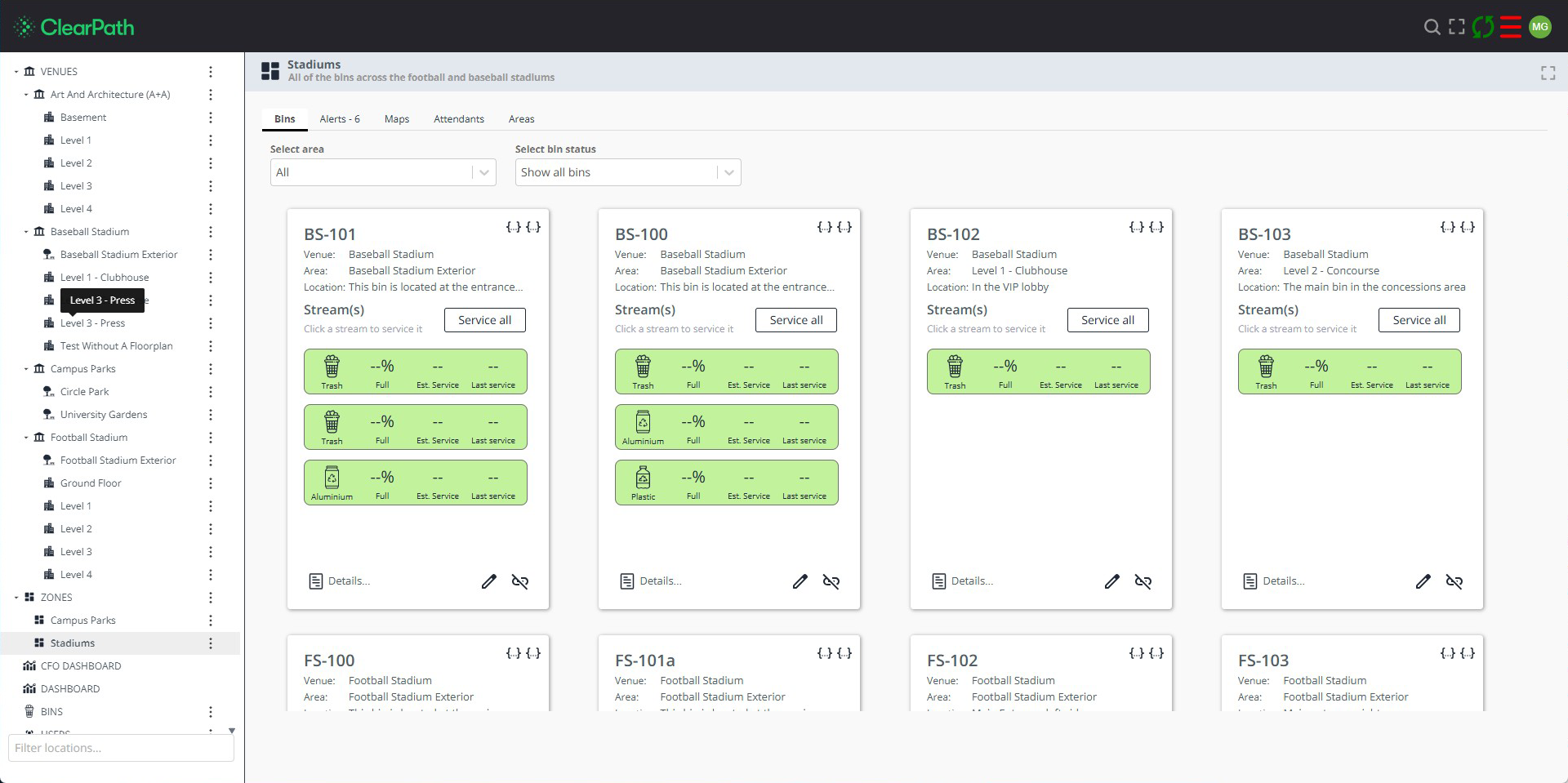
The service technician opens a mobile hit list and sees the containers to service in priority order, with location and stream visible per row. The compliance officer sees the same operation from a facility-wide view: real-time container status across every location, threshold proximity, and the service actions logged against each one.
The calendar that produced overflow events doesn’t produce them anymore, because the calendar isn’t in charge. The signal is.
Overflow prevention is the buying decision. Everything else is supporting math.
In sharps and medical waste, the dominant value isn’t labor reallocation. It’s regulatory protection.
Operations efficiency buyers ask what they save. Compliance buyers ask what they avoid. A single OSHA citation under the Bloodborne Pathogen Standard can be worth $15,000 to $156,000 depending on classification. A serious or willful violation moves into six figures fast. A pattern of citations triggers an inspection cadence that compounds. The cost of a single avoided citation can underwrite years of ClearPath service before the labor math even enters the conversation.
That math holds for any compliance-driven category. Hazardous waste violations under RCRA can reach $70,000 per day per violation. State regulators add their own penalty structures on top of federal ones. The cost of a single avoided regulatory event is asymmetric to the cost of preventing it.
ClearPath’s overflow prevention is the operational version of compliance protection. The container that doesn’t overflow is the citation that doesn’t get written.

Three ways the math compounds underneath compliance protection.
Overflow prevention is the headline. The labor and operational savings underneath it are real, and they make the deployment math work even before the first citation gets avoided.
Technicians service the containers that need service.
Calendar-based sharps service touches containers that aren’t close to full and runs past containers that are. Demand-triggered dispatch ends that. The hours come back to the team.
Routes shrink. Vehicle costs follow.
For route-based medical waste haulers, the route compresses to the containers that need pickup. Fewer stops, fewer miles, less vehicle wear. The savings compound across every truck running every day.

Peak demand stops breaking the operation.
Flu season, mass-vaccination events, post-procedure spikes, regulatory inspection windows. ClearPath sees demand as it happens and dispatches against it. The peak gets covered without staffing the baseline for the peak.
Every service action, logged. Every threshold crossing, recorded.
In regulated categories, the service that happened but wasn’t documented didn’t happen. A compliance officer can’t defend the operation in an audit on the strength of “I know we did it.” The records have to be there.
ClearPath produces the audit trail as a byproduct of running. Every container has a service history. Every threshold crossing is timestamped. Every service action is logged with location, technician, time, and outcome. The data sits in the platform and exports to whatever framework an auditor wants to see.
This isn’t a separate compliance product layered on top. It’s the same dispatch data, organized for the questions a regulator will ask.
What the math looks like in practice.
Three illustrative scenarios anchored in public regulatory data and operational benchmarks. The labor savings will be specific to each operation. The avoidance math holds across the category.

The mid-sized hospital
A 400-bed hospital with sharps containers across patient rooms, procedure suites, lab spaces, and pharmacy. Calendar-based service runs on a fixed rotation. The compliance officer carries the risk of every overflow event across hundreds of containers. A single visible-overflow finding during an inspection can trigger a citation in the $15,000 to $50,000 range; a pattern of findings can push the same operation into six figures. ClearPath replaces the rotation with demand-triggered dispatch. The math doesn’t start with labor. It starts with the citation that didn’t happen.
The regional medical waste hauler
A regional medical waste operator running calendar-based pickup routes across 50+ accounts. Calendar service produces two problems: trucks arrive at containers that aren’t full (wasted route capacity) and miss containers that overflowed between visits (customer liability and regulatory exposure that flows back to the hauler). ClearPath surfaces which containers need pickup in real time. The route shrinks to the work that matters. The customer’s overflow risk drops, which keeps the customer.


The multi-location surgical or specialty network
An outpatient surgical group running 12 to 30 locations under a single compliance officer. Each site has its own service cadence, its own staff, its own gaps in documentation. The compliance officer’s job is to defend all of them. ClearPath produces a single audit trail across every location, on demand. The defensibility shifts from “trust the team” to “pull the report.”
Bring recurring revenue to your sharps and medical waste business.
Medical waste operators, sharps service providers, hospital supply and pharmacy par-level service providers, and equipment distributors in the compliance category are the natural ClearPath partners in sharps and medical waste. The customer relationship is already there. The compliance pain is recognized on sight. ClearPath adds the dispatch intelligence and the recurring subscription model on top.
For an operator with hundreds or thousands of accounts and containers in the field, the shift is direct: existing customers add a recurring service tier that resolves the compliance problem they already pay people to manage. The partner brands ClearPath as their own service, keeps the customer relationship, and captures the recurring revenue. ObjectSpectrum builds and operates the platform.

Put ClearPath in your compliance workflow.
Tell us about the operation: container count, basic geography, current service model, the regulators you answer to. We’ll connect you with the right path to deploy, whether through a regional partner or directly with the team that built ClearPath.