
Three layers.
One platform.
The work that needs doing gets done.
ClearPath senses real-time conditions at fixed service points, decides which points need attention, and dispatches the work to the team that does it. Here's how the three layers work together.
Three things make ClearPath work.
Sensors that report what's happening. Intelligent software that decides what to do about it. A partner who owns the customer relationship. Each layer does one job. Together, they replace calendar-based service with demand-triggered dispatch.

Sensor layer
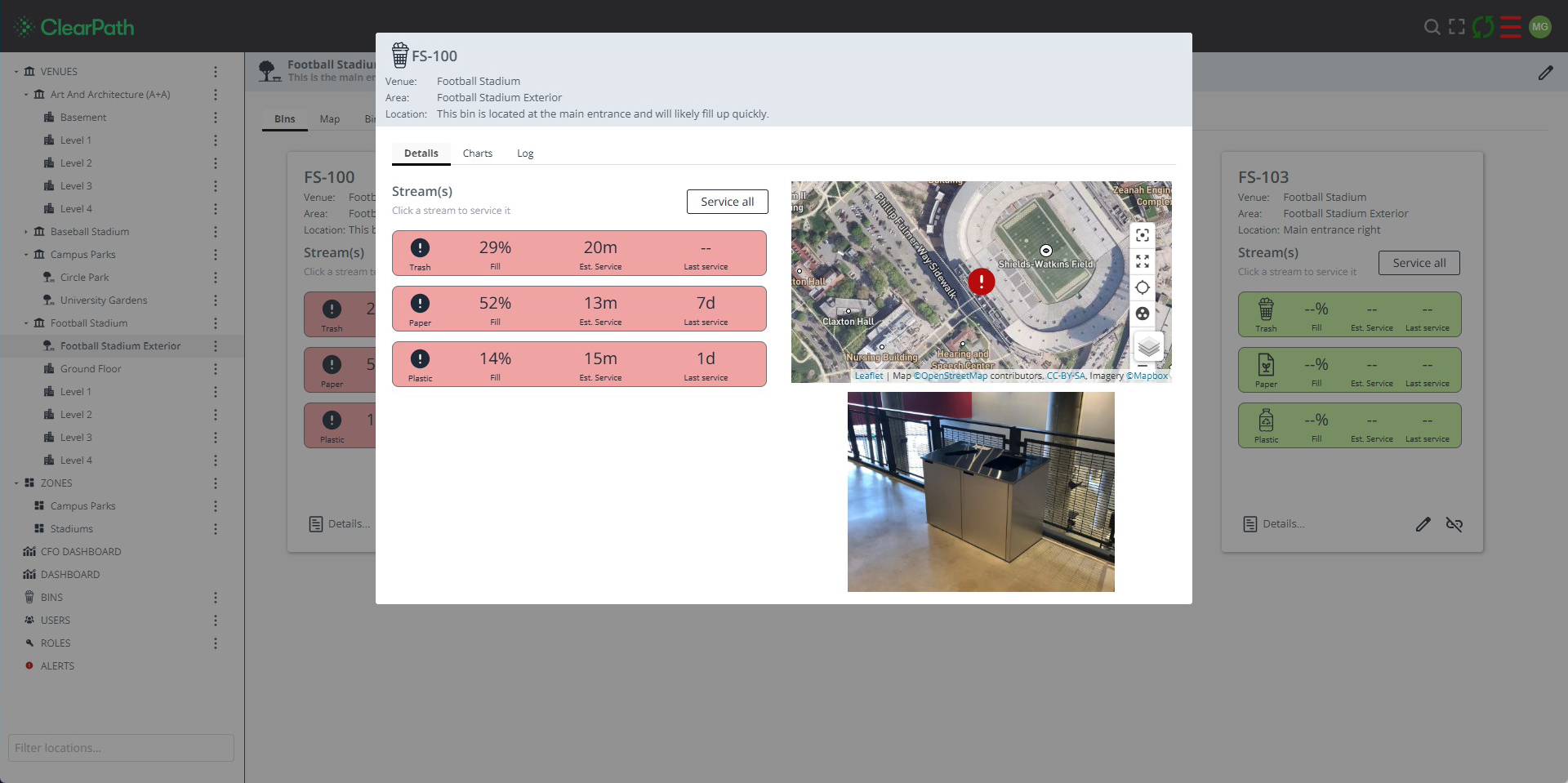
Sensors at every service point report real-time conditions. Accumulation in a bin. Depletion in a dispenser. Fluid level in a tank. Real signal, not estimated cadence.
Dispatch layer
The platform reads every signal, applies thresholds and priority logic, and decides which points need service now. The route gets assembled in real time.

Partner interface
ClearPath ships under the partner's brand, configured for their vertical, integrated with their operational systems where applicable. The customer buys from the partner.

Sensors that fit the job.
Every fixed service point gets a sensor matched to what's being measured. The mechanism varies by vertical. The job doesn't.
In waste and recycling, sensors measure accumulation: how full the bin is. In restroom consumables and stadium operations, they measure depletion: how much paper, soap, sand, or supply is left. In fleet fueling, they measure fluid level across distributed vehicles. The pattern is the same in every case: a physical condition gets turned into a real-time signal.
The sensors do one job well: make the invisible state of every service point visible to the platform. They report on a cadence that matches the operational rhythm of the vertical.




Logic that turns signal into work.
The dispatch layer is where ClearPath earns its keep. It's the difference between telemetry and operational outcome.
Sensor data alone is noise. The dispatch layer reads every signal across every service point, applies threshold logic configured for the operation, weighs priority and routing, and produces a dispatch decision: which points need service now, which can wait, and which route path makes sense given the points that need attention.
The decisions update continuously. A bin that wasn't on the list ten minutes ago will be on the list now, if it has crossed the threshold. A route in progress can re-sequence if a higher-priority point comes online. The cadence is the signal, not the schedule.
This is the work that calendar-based service can't do. A calendar can't see which bin is full. The dispatch layer can.


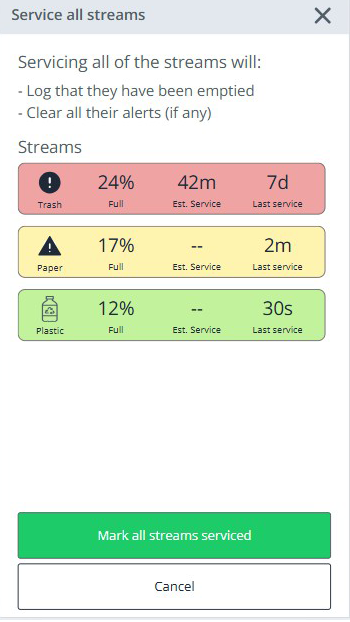
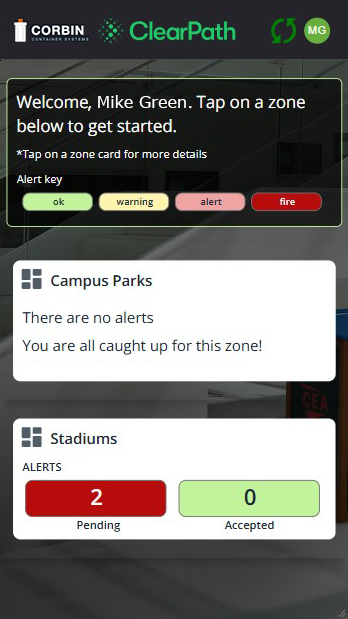
Always private-labeled. Always the partner's product.
Every ClearPath instance ships under the partner's brand. The platform is the same underneath; the customer-facing experience is the partner's.
That means the mobile interface the custodian opens, the dashboard the supervisor checks, and the integration with the partner's billing and operational systems all run under the partner's name. The customer buys from the partner, with their relationship and support behind it.
ObjectSpectrum operates the platform. Partners brand it and sell it. The two roles don't blur.



Four beats, on a loop.
The cycle runs continuously. Every signal is the start of the next dispatch.
Calendar-based service runs in fixed cycles set in advance. ClearPath runs in cycles set by the operation. The schedule was the input. Now the signal is.
Sensors report
Every service point reports its state in real time. Accumulation, depletion, or fluid level, depending on the vertical.

Platform prioritizes
The dispatch layer reads every signal, applies threshold logic, and decides which points need service now.

Teams act
Custodians open a mobile hit list. Drivers get a re-sequenced route. Fuelers get a list of vehicles that actually need fuel.

Cycle repeats
Sensors continue reporting. The next signal is already coming in. The dispatch updates in real time.

See the ROI engines
Three operational engines that come back as labor, coverage, and capacity.

See the capabilities
What the platform ships with today, including sensor types, dispatch logic, and integration support.

Get ClearPath in your operation
Tell us about the operation. We'll connect you with the right path to deploy.
Become a partner
Equipment manufacturers and service operators brand ClearPath as their own product.