
The trip that didn’t need to happen, doesn’t.
On-demand fueling for commercial fleets, airport ground support equipment, and distributed assets. The truck rolls to the vehicles that need fuel, not the ones on the schedule.
Calendar-based fueling rolls trucks to vehicles that don’t need fuel.
A fuel truck drives a scheduled route. Every vehicle on the list gets topped off, regardless of where the level actually sits. Most vehicles didn’t need fuel. A few did, and the truck won’t reach them until the next pass.
The schedule is a guess at where the work will be. The geography makes the guess expensive. Every wasted stop is a truck roll across distance: across an airport ramp, across a regional service territory, across a campus, across a network of remote sites. Unlike a custodian walking a route inside a building, a fueler crosses real ground between every service point. The unit cost of a single trip is high. The unit cost of a wasted trip is the same.
The cost compounds in three places. Labor on the rounds, fuel and maintenance for the trucks running the rounds, and the asset downtime when a vehicle the schedule missed runs out of fuel between scheduled visits. A ground support tug that runs dry mid-shift takes a gate out of service. A backup generator at a remote site that runs out of fuel before the next scheduled top-off becomes an outage. A fleet vehicle that hits empty before the route finds it is a driver waiting on a roadside.
For the fleet manager: the schedule was sized for predictable consumption that doesn’t actually happen, and the operational consequences of the gaps land somewhere visible every time.





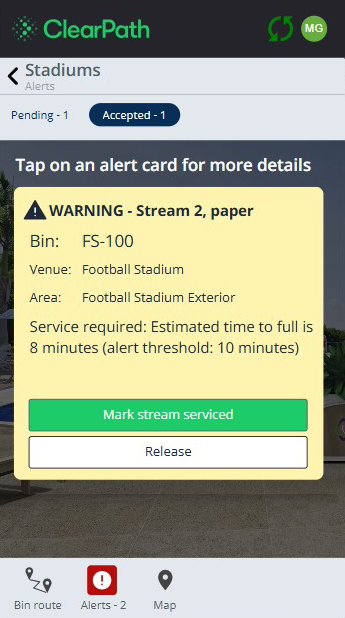
ClearPath sees the fluid level and routes the truck.
Sensors on every asset track real-time fluid level. ClearPath reads the data, decides which vehicles or equipment need fuel, and assembles the route in real time.
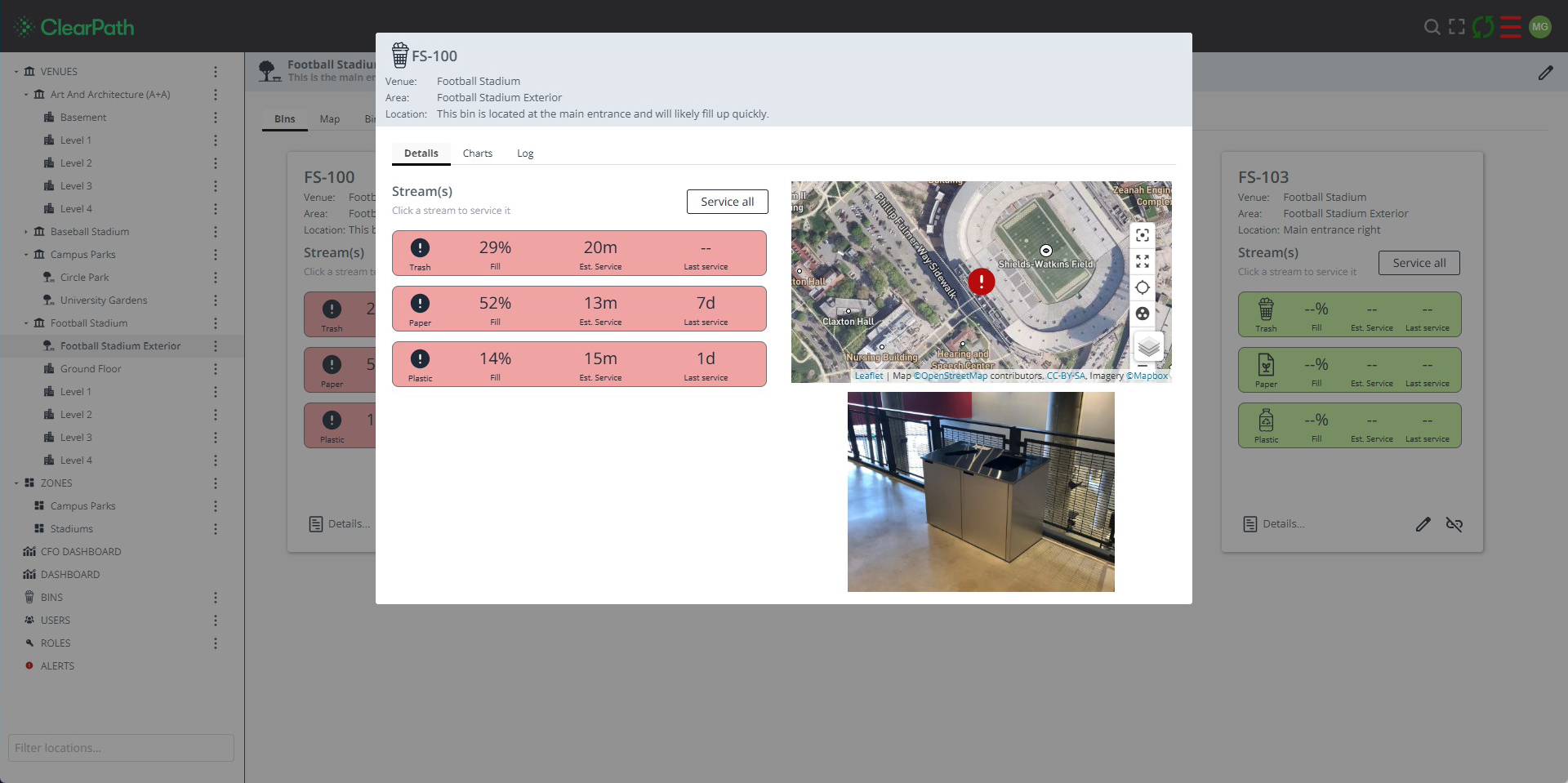
The fueler opens a mobile hit list and sees the assets to service in priority order, with location and fluid level visible per row. The fleet manager or ground operations director sees the same operation from a facility-wide dashboard: every vehicle, every piece of ground support equipment, every remote asset, with fluid status visible across the operation.
The route stops being a guess. The truck rolls to the assets that signal a need. The ones that don’t, don’t get touched. The asset that was about to run dry gets covered before it does. The truck rolls that didn’t need to happen stop happening.
The truck stays parked when the route doesn’t need it.
In fleet fueling, the dominant value isn’t labor reallocation or peak coverage. It’s the elimination of trips that didn’t need to happen.
Calendar-based fueling is built on an assumption that every asset on the list needs attention every cycle. The assumption is wrong most of the time. A scheduled stop at a vehicle still half full isn’t a near-miss; it’s wasted truck time, wasted driver labor, wasted fuel for the truck doing the rolling, and wear on the truck itself. ClearPath ends every one of those stops.
The math scales with the geography of the operation. For an airport ground support fleet, every wasted ramp trip is fuel, labor, and tug time across the apron. For a commercial fleet, every wasted stop is a route deviation that adds miles. For distributed assets across a service territory, every wasted trip is hours of vehicle time that could have been somewhere else. The unit cost of a trip in fleet fueling is high enough that eliminating even a modest percentage of wasted dispatches produces real money.
What ClearPath returns: the trips that didn’t need to happen. The fuel costs on those trucks. The wear that wasn’t put on the equipment. The hours that came back to the fueler. Spread across an operation, the math compounds.

The asset that doesn’t run dry. The crew that gets the time back.
Asset coverage is the headline. The labor savings and operational uptime underneath it make the deployment math work before the trip-elimination math even finishes.

Assets stop going out of service.
ClearPath reaches each asset before the level hits critical, because the platform sees the trend before the schedule does. The tug stays on the ramp. The generator stays online. The driver stays on the route.

Trips shrink. Crew capacity follows.
The hours that disappear from wasted truck rolls come back to the operation. Some fleets reduce contract labor and overtime. Others absorb growth without adding headcount. The fueler the operation already has covers more of the fleet.
The dispatch record builds itself.
For regulated operations (fuel storage facilities, hazardous materials transport, DOT-regulated vehicles), ClearPath's service documentation accumulates across every dispatch event. The audit trail is there when an inspector or an internal review needs it.
What the math looks like in practice.
Three illustrative scenarios across the operational profiles where the platform pattern applies. The numbers are operational benchmarks; the actual figures come from a discovery conversation tied to your specific operation.

The airport ground support operation
A mid-sized airport with 200+ pieces of ground support equipment across multiple ramps: tugs, belt loaders, baggage tractors, GPUs. A calendar-based fueling round touches every piece on a rotating schedule, with the rounds sized to cover worst-case consumption. Most stops find equipment that didn’t need attention; the ones that needed attention an hour ago are still waiting. ClearPath dispatches the fuel truck against actual fluid level. The truck rolls stop when they aren’t needed. The tug that would have run dry mid-shift gets fueled before it does. The gate stays open. The labor comes back to the operation.
The commercial fleet operation
A regional fleet of 150+ commercial vehicles running scheduled routes across a service territory. DEF and fuel levels follow consumption that varies by route, load, and weather; the calendar doesn’t track any of those variables. ClearPath does. The vehicles that need fuel get it. The roadside calls drop. The cascading scheduling problems from a single empty-tank breakdown drop with them. The fleet manager runs a more predictable operation against the same fleet.


The remote and distributed asset operation
An operation with distributed backup generators, remote pump stations, or agricultural infrastructure across a region. Each asset matters individually; an outage at any one of them carries operational consequences that compound. Calendar-based service can’t accommodate the variance in consumption across distributed sites. ClearPath surfaces which assets need attention in real time, against geography. The truck route is built against actual need. The asset that would have run dry doesn’t. The outage that would have happened doesn’t.
These scenarios are anchored in operational benchmarks for stadium, venue, and golf course operations. ClearPath does not yet have a fully deployed stadium and venue consumables partner; the scenarios describe the operational shift the platform produces, not a specific deployment’s validated math. Every actual conversation starts with your operation.
Put ClearPath in your fueling workflow.
Tell us about the operation: asset count, fleet type, basic geography, current fueling model, the consumption patterns that drive your route variance. We’ll connect you with the right path to deploy, whether through a regional partner or directly with the team that built ClearPath.
Make every truck roll count.
Mobile fueling operators, on-site fleet fueling service providers, ground support equipment service operators, and distributed-asset service operators are the natural ClearPath partners in this category. The equipment and the service routes are already in the field. The customer relationship is already there. ClearPath adds the dispatch intelligence and the recurring subscription model on top.
The fleet fueling category is open for partner. For a partner running fueling routes against hundreds or thousands of customer assets, the shift is direct: existing customers add a recurring service tier against the equipment they already serve. The partner brands ClearPath as their own service, keeps the customer relationship, and captures the recurring revenue. ObjectSpectrum builds and operates the platform.
