
The rounds run blind. ClearPath sees the dispensers.
On-demand restocking for paper, soap, sanitizer, and hygiene products. The cart goes to the dispensers that need it, not the ones on the schedule.
Calendar-based restroom rounds get it wrong in both directions.
A custodian walks a restroom round on a fixed cadence. Half the dispensers are still full. A few are already empty. The cadence is a guess at where the work will be, and the guess is wrong both ways.
The full dispensers get serviced anyway. The empty ones got that way an hour ago and stayed that way until the next round. The cart moved through the building. The work moved with it. The depletion didn’t follow the schedule.
For the ops director, the cost shows up in two places at once. Too much labor on the rounds. Too little coverage at peak. Move-in weekend, graduation, conference week, exam week, flu season, post-event afternoons. The schedule held steady while demand spiked, and the building noticed.
A restroom out of paper at 10am during a campus event isn’t a problem the operations team learns about later. It’s a problem the building manager hears about in the next five minutes.




ClearPath sees the depletion and routes the team.
Sensors in every dispenser track real-time depletion. ClearPath reads the data, decides which dispensers need restocking, and assembles the route in real time.
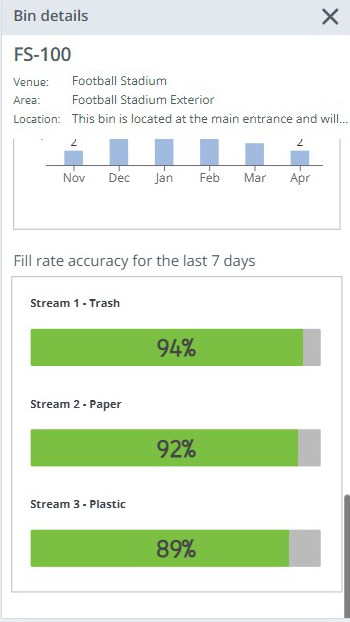
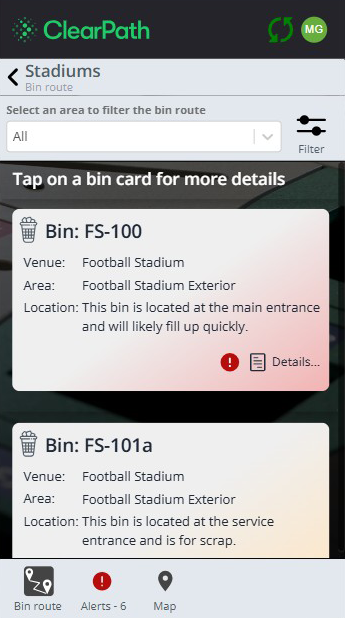
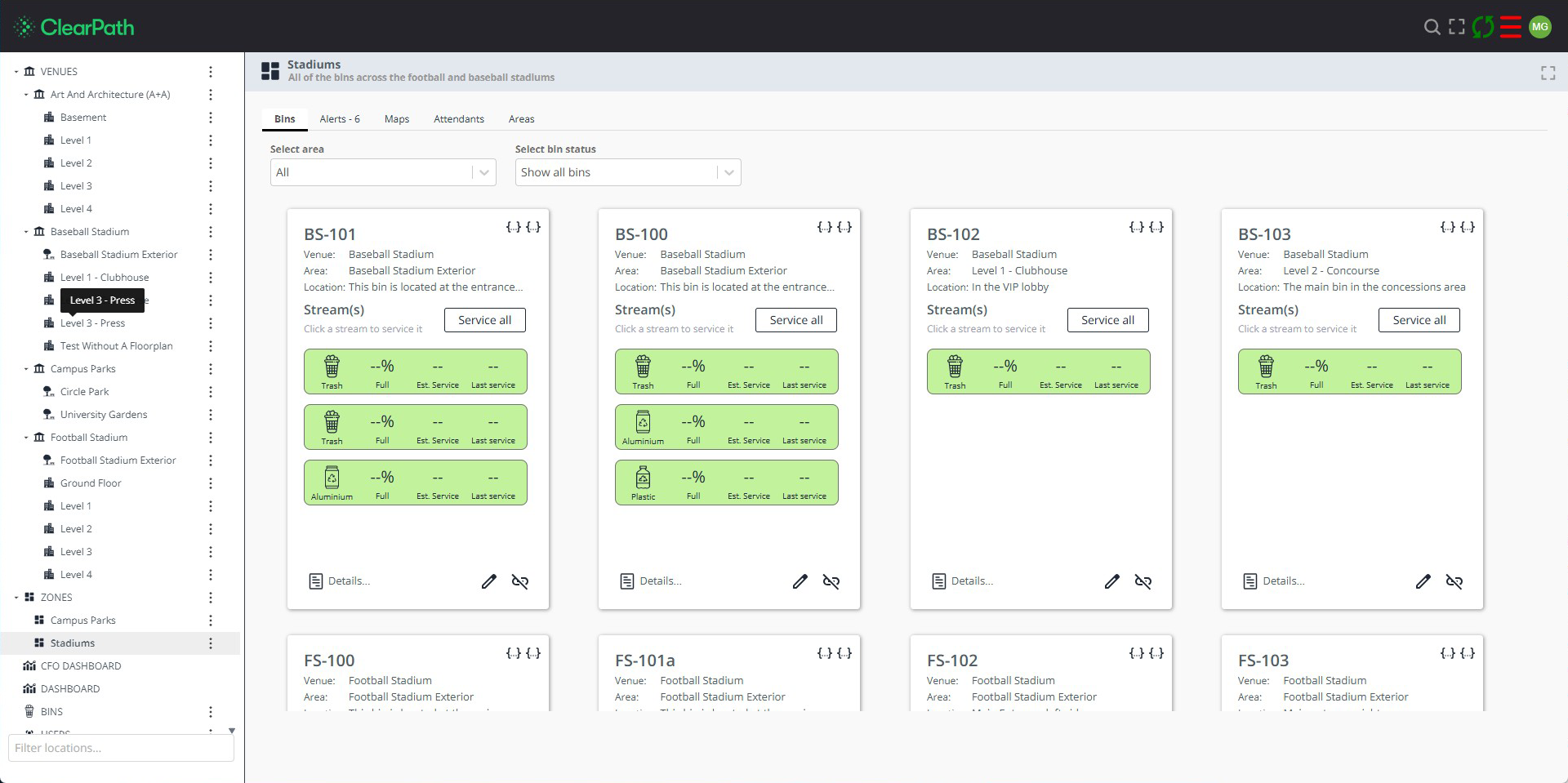
The custodian opens a mobile hit list and sees the dispensers to service in priority order. The supervisor sees the same operation from a facility-wide dashboard. Both see what’s actually in each dispenser, in real time, across every restroom in the facility.
The cart goes to the dispensers that need restocking. The ones that don’t, don’t get touched. The route shrinks. The work compresses. The empty dispensers don’t stay empty for an hour.
Custodians service the restrooms that need it, not the ones on the schedule.
Calendar-based restroom work is labor-intensive by design. Routes are sized for worst-case demand and run at worst-case cadence regardless of actual conditions. The result is a crew running rounds that don’t move the operation forward.
ClearPath turns the calendar work into demand-triggered work. The hours spent restocking dispensers that didn’t need attention come back to the crew.
Some operations use those hours to reduce overtime and contract labor. Most use them to cover deeper cleans, deferred projects, and quality work that always slips first under pressure. A floor that gets the attention it needed instead of the round it was scheduled for. A restroom that gets a deep clean between high-traffic periods instead of a quick wipe-down. A custodial team that runs ahead of the building instead of behind it.
The next FTE hire that growth would have forced doesn’t need to happen. The crew the operation already has grows into the work.
A dispenser out at the wrong moment is a photo on Google Maps before ops hears about it. That one-star review with the image lives on your listing permanently and is visible to every parent researching campuses, every event planner comparing venues, every guest who searches before they visit.


Three ways the math compounds underneath compliance protection.
Peak coverage is the headline. The labor and operational savings underneath it compound across every shift in a multi-building facility.

Custodians restock the dispensers that need restocking.
Calendar rounds run on a schedule. ClearPath dispatches on a signal. When a dispenser drops below threshold, a task goes to the right custodian before the next round would have caught it.
Routes compress. Labor follows.
The cart stops passing full dispensers to restock empty ones across the building. Routes compress to the work that's actually there. Hours that used to run the full route come back to the team.

Peak demand stops breaking the operation.
Move-in weekend, graduation, exam week, conference days, post-event afternoons. ClearPath sees depletion as it happens and dispatches against it. The peak gets covered without a crisis round.
Two scenarios.
Two illustrative scenarios across operational profiles where the platform pattern applies.

The mid-sized university
A university with 40 academic and administrative buildings, hundreds of restrooms, and a custodial team running calendar-based rounds. The schedule is sized for normal demand and stretched thin during high-traffic periods. Move-in weekend, graduation, conference week, exam week, and flu season each break the routine in a different way. The ops director carries the cost of overtime, contract labor, and the building-manager complaints that follow every event. ClearPath turns the calendar rounds into demand-triggered restocking. The crew already in place covers more of the campus without growing. The peak periods stop breaking the schedule because the schedule isn’t the constraint anymore.
The event-driven venue
A convention center or large stadium with 60+ restrooms and 70+ events a year. Each event day is its own load profile, with restrooms going from fully stocked at 7am to half-depleted by lunch to empty by the post-event flush. Calendar-based service can’t cover that curve; staffing it for the peak means overpaying for the off-hours, and staffing it for average means the peak fails publicly. ClearPath dispatches against actual depletion. The cart shows up where the work is. The event holds together at the moments guests are most likely to notice.

Make your dispensers a recurring service business.
Paper, soap, and sanitizer manufacturers and distributors are the natural ClearPath partners in restroom consumables. The dispensers are already in the field, often under the partner's brand. The customer relationship is already there. ClearPath adds the dispatch intelligence and the recurring subscription model on top.
For a partner with thousands or hundreds of thousands of dispensers across customer facilities, the shift is direct: existing customers add a recurring service tier against dispensers they already own. The partner brands ClearPath as their own service, keeps the customer relationship, and captures the recurring revenue. ObjectSpectrum builds and operates the platform.
Put ClearPath in your custodial workflow.
Tell us about the operation: dispenser count, basic geography, current service model, the events and seasonal patterns that drive your peak demand. We’ll connect you with the right path to deploy, whether through a regional partner or directly with the team that built ClearPath.