
What a ClearPath partner looks like.
A ClearPath partner makes, distributes, or services physical infrastructure for fixed-path operations. The installed base runs into the thousands or more. The vertical has a dispatch problem operations leaders recognize on sight, and the leadership wants recurring revenue against equipment that previously sold once.
The profile fits container manufacturers, equipment distributors, and service operators: companies whose customers run the operations ClearPath was built for.


What ClearPath brings. What you bring.

ClearPath brings:
ClearPath brings the platform: sensors, dispatch logic, data infrastructure, and partner integration. The whole stack is built on Prism and operated by the ObjectSpectrum team behind ClearPath.
The platform doesn’t stand still. ObjectSpectrum continues investing in platform capabilities, and partners benefit from that investment without funding the development themselves.

You bring:
The partner brings the customer relationship: the installed base, the vertical expertise, the contracts, the trust. This is the thing ClearPath cannot replicate from outside.
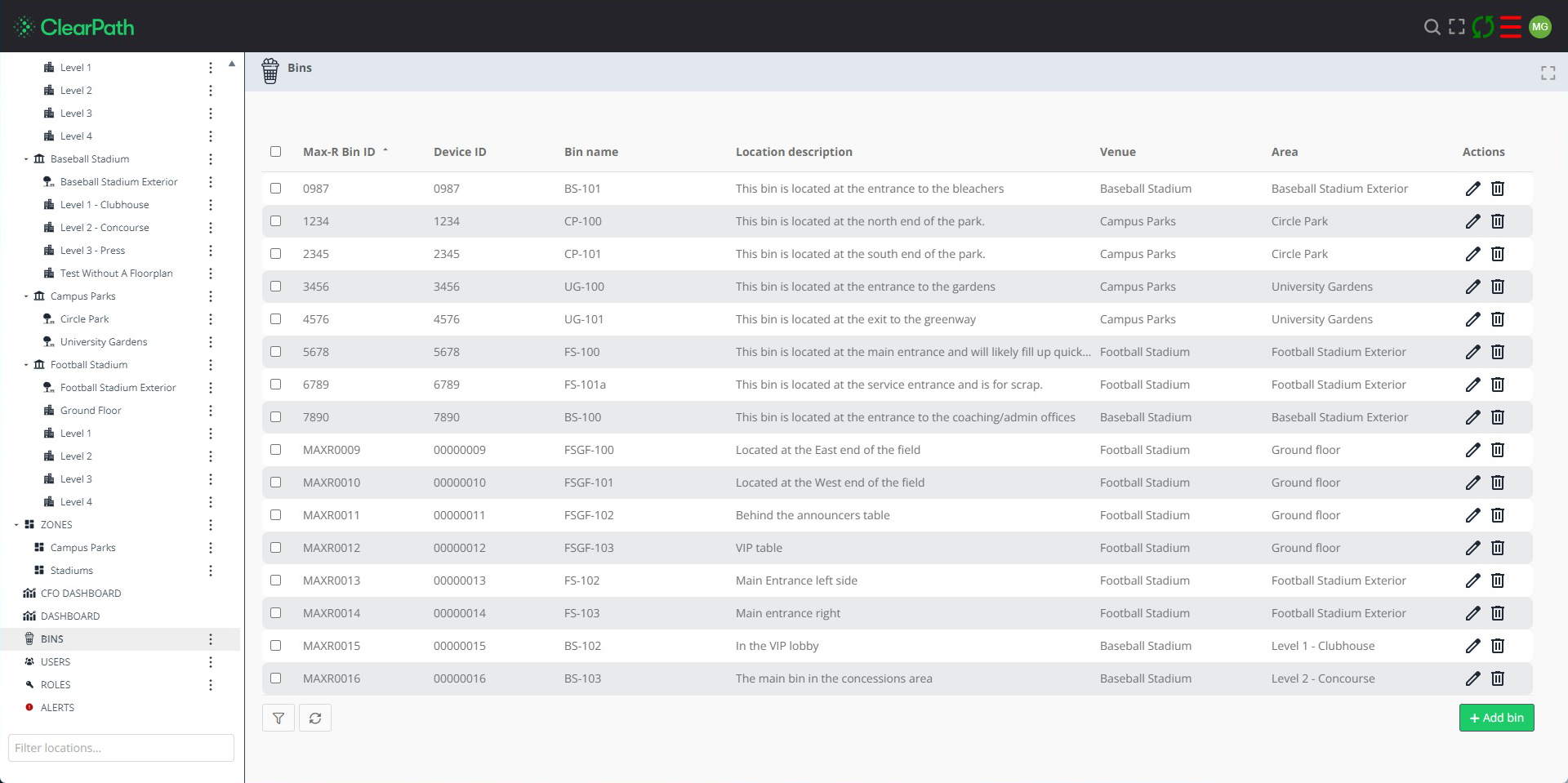
The partner also brings the brand. ClearPath ships under the partner’s name, configured for the vertical and integrated where applicable with the partner’s existing systems.
How the math compounds across your installed base.
ClearPath partners sell a recurring subscription to end customers for each active stream under management. The partner sets the end-customer pricing, owns the customer relationship, and keeps the recurring revenue.
The math compounds across the installed base. Every active stream is recurring revenue added. Three illustrative scenarios show what that progression can look like at different partner profiles.

The mid-market container maufacturer
20,000 bins in the field, 2 streams per bin. Year 1 at 25% subscription rate: 10,000 streams, ~$360K annual recurring revenue. Year 2 at 50%: ~$700K. Year 3 at 75%: >$1.3M.
The regional service operator
8,000 dumpsters.
Year 1 at 40%: ~$480K.
Year 2 at 55%: ~$660K
Year 3 at 70%: >$830K.

The category-defining brand
400,000+ units. At conservative subscription rates, hundreds of thousands of active streams generate multi-millions in annual recurring revenue against equipment the customer already owns.
Pricing is partner-specific. The math compounds the same way.

ObjectSpectrum operates the platform
ObjectSpectrum builds the platform, runs it, and keeps investing in it. The partner never manages the stack.

The partner owns the customer relationship
The partner brands ClearPath, sets end-customer pricing, and owns the relationship. The recurring revenue is theirs.

Support and structure
ObjectSpectrum handles Tier 2 technical support directly. Partnerships are non-exclusive.
When this isn't the right fit.
If leadership isn't engaged on the recurring revenue argument, the partnership conversation usually stalls. Leadership at the table from the start is the pattern that works.
If the installed base is too small to compound, the math doesn't justify the motion. ClearPath is built for scale: thousands of units in the field, not hundreds.
If the vertical doesn't have a recognizable dispatch problem, there's nothing to solve. The right verticals have service-timing inefficiencies that operations leaders identify immediately.

